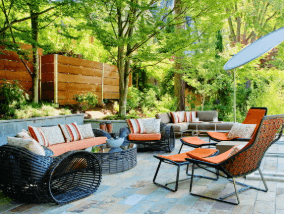
Furnishing customers with secure and cosy seating is essential in commercial outdoor areas’ dynamic and constantly changing world. This article explores the vital safety requirements that commercial outdoor furniture must meet to guarantee both the users’ well-being and aesthetic appeal. By knowing these criteria, manufacturers and business owners may design secure and welcoming outdoor spaces.
MATERIAL SAFETY
Commercial outdoor furniture must be resilient to various weather extremes, including wind, rain, snow, and direct sunshine. Materials that are durable and resistant to corrosion, such as treated wood, stainless steel, and aluminium, are frequently utilised. Furthermore, UV-resistant coatings keep materials exposed to sunlight from fading and degrading.
Furniture should be manufactured of non-toxic materials to reduce health concerns. This is especially important for surfaces near food and beverages. Even in the most severe weather, non-toxic paints, finishes, and treatments guarantee that no dangerous chemicals are emitted.
STRUCTURAL INTEGRITY
It is imperative that furniture be engineered to accommodate a broad spectrum of human weights while maintaining structural integrity. Chairs, tables, and benches must undergo extensive testing to ensure they can support both static and dynamic loads. Standards frequently require a safety factor, which guarantees the furniture can handle greater weight than it would normally face.
To avoid tipping and possible accidents, stability is essential. To improve stability, tables and chairs should have a wide base and a low centre of gravity. Anti-tip systems and weight distribution are essential during the design and testing stages.
ERGONOMICS
With extended usage, ergonomic design guarantees comfort and lowers the chance of strain or damage. This covers the proper placement of the armrests, backrest angle, and seat height. Table heights should be adjustable to fit comfortably in various chair kinds and user heights.
FIRE SAFETY
The commercial outdoor furniture must be fire-resistant, particularly in locations where grilling, smoking, or other fire-related activities take place. Flame-retardant textiles, metal, and treated wood are among the necessary materials. It is essential to abide by local fire laws and regulations, which frequently call for stringent certification and testing.
See also: How Cloud Faxing Is Revolutionizing Business Communications
ENVIRONMENTAL CONSIDERATION
Sustainable methods are becoming increasingly crucial in the selection of materials and production procedures. Reducing the environmental effect of furniture may be achieved by using recycled materials and making sure it is recyclable at the end of its life cycle. Certifications like LEED (Leadership in Energy and Environmental Design) demonstrate high environmental standards.
Eco-friendly coatings and treatments should be used, avoidingand chemicals that are bad for the environment should be avoided. Water-based paints and sealants are better than solvent-based ones since the former might release volatile organic compounds (VOCs).
MAINTENANCE AND DURABILITY
Outdoor furniture for businesses should be simple to maintain and clean. The best materials don’t stain, mould, or mildew easily. Wipeable surfaces and removable, washable cushions may preserve hygiene and attractiveness.
When an item is durable, it has a longer lifespan, which results in fewer replacement needs. Furniture made using premium materials, and building methods will last years of harsh use and climatic conditions. Manufacturers frequently provide guarantees as evidence of the robustness of their furniture.
COMPLIANCES WITH STANDARD
Adherence to industry norms, including those established by the International Organisation for Standardisation (ISO) and the American Society for Testing and Materials (ASTM), guarantees that the furniture fulfils exacting criteria for quality and safety. From material qualities and structural integrity to safety and environmental effects, these standards cover it all.
Respecting the laws and ordinances in the area is required. This covers municipal regulations for public areas, fire safety norms, and accessibility standards (such as those delineated in the Americans with Disabilities Act, ADA).